
Guide · 10 min read
Laser Hair Removal Safety: Is It Harmful Long-Term?
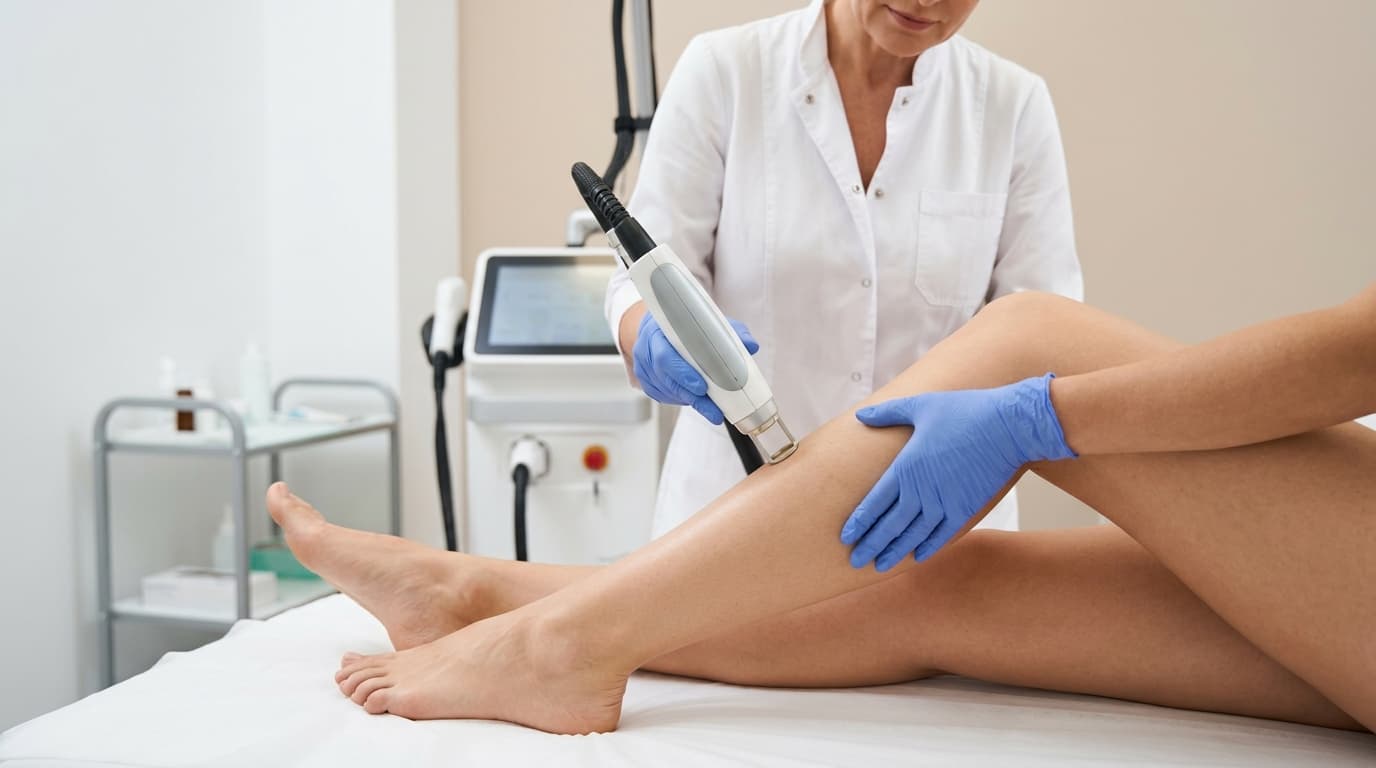
Laser hair removal works with concentrated light energy that is absorbed by the pigment in the hair. This creates heat around the hair follicle and reduces hair growth over the long term.
The most common concern is therefore: can the treatment permanently damage the skin, or cause cancer over time?
Based on current research, there is no convincing evidence that laser hair removal causes cancer or systemic harm to the body. At the same time, research on very long observation periods is more limited than for many other medical procedures. In short, the method is considered well studied and largely safe, but the risks are not zero.
Can laser hair removal cause cancer?
Lasers belong to non-ionizing optical radiation. They do not carry the kind of radiation that can ionize atoms, such as X-rays or gamma rays. Non-ionizing radiation can still heat tissue at sufficient intensity and cause damage.
In hair removal, this local heat is exactly the intended effect: the pigment in the hair absorbs light and warms the hair follicle.
There is no convincing clinical evidence that laser hair removal causes cancer. A systematic review of changes to moles after laser hair removal found that morphological changes can occur, but no documented cases of malignant transformation of treated nevi. The authors also stress that long-term data remain limited.
The more accurate statement is therefore: laser hair removal is not known to cause cancer. Long-term data spanning several decades are naturally more limited than data on short-term safety.
What long-term side effects can occur?
Most side effects are temporary. Known complications include:
- changes in skin pigmentation
- burns
- blistering
- inflammation of the hair follicles
- scarring
- paradoxical hypertrichosis
- changes in pigmented skin lesions
- eye injuries from improper use
A recent review analyzed 104 publications on side effects of laser and IPL hair removal. The authors described both skin reactions and various eye complications. The risks depended on factors including skin type, body area, device and treatment settings.
Burns and pigment changes
The most common risks affect the skin itself.
If too much energy is used, or if skin type or tan are not adequately taken into account, the skin can overheat. Possible results include redness, crusting, blisters or burns.
Skin type is especially important. An older large study of 900 laser treatments found unwanted skin reactions mainly in tanned skin and in higher Fitzpatrick skin types. Scarring and long-term complications were not observed in that study. Another review also concluded that pigment changes can occur more often with shorter wavelengths and darker skin types.
Can scarring occur?
Yes, scarring is a possible complication, but it is not considered a typical result of a correctly performed treatment.
The risk rises especially when the skin is subjected to too much thermal stress. A suitable device, correct settings and adjusted cooling reduce this risk. European guidelines on photoepilation, for example, recommend test areas and adjusting treatment parameters to skin and hair type.
Can laser hair removal damage the eyes?
Yes. This is one of the most important safety risks and is sometimes underestimated in discussions of long-term effects.
Laser light is highly concentrated. The eye can focus light onto the retina, so even relatively small amounts of light can be dangerous. The literature has described inflammation, iris changes and cataracts after light treatments, among other effects. That is why you should never look directly into the laser beam. Treatments near the eyes on the face are especially critical.
What happens to moles?
An important point is the treatment of pigmented skin spots.
Laser light is absorbed not only by hair melanin but also by other pigmented structures. Studies show that moles can change in color, size or dermoscopic appearance after laser hair removal.
That does not mean skin cancer automatically develops. The real problem is that later assessment of a changed mole can become more difficult.
For this reason, suspicious or unclear pigmented skin lesions should not simply be treated along with the hair. A systematic review from 2023 recommends having suspicious moles assessed by a dermatologist before treatment.
Can laser hair removal cause paradoxical hypertrichosis?
Yes, but rarely.
With paradoxical hypertrichosis, hair in an area grows back unexpectedly thicker or more visible after treatment. The phenomenon has been observed most often on the face and neck. To learn more about how this shows up with facial treatments, read our guide Facial Hair Removal: Which Method Fits?.
A systematic meta-analysis from 2021 found a pooled frequency of about 3 percent. Outside the face and neck, the figure in the data analyzed was only 0.08 percent. The cause is not fully understood. Insufficient thermal damage to the hair follicle is one explanation being discussed.
How good is the long-term data?
An important distinction is needed here.
For laser hair removal there are many studies with follow-up periods of several months to years. The data show a long-term reduction in hair growth. However, complete and lasting removal of all hairs in every person is not scientifically guaranteed.
A 2023 network meta-analysis concluded that laser and IPL methods are effective and generally safe. It also stressed that longer follow-up is needed for a truly long-term assessment. That is an important difference from the claim that the treatment is “completely risk-free.”
Is professional laser hair removal safer than a home device?
Professional systems allow higher and more precisely adjustable energy levels. This increases the potential for strong hair reduction, but it also makes choosing the right device and settings more important.
Home IPL devices usually work at lower power levels and include built-in safety features. Systematic reviews rate at-home IPL as effective and generally favorable in terms of safety for suitable users. At the same time, the data on very long-term safety are more limited.
What should you check before professional treatment?
In the United States, the FDA regulates hair removal lasers and other light-based devices, while the rules for who may operate them differ from state to state. Before booking, ask who will perform the treatment, what training they have, and how the device is set for your skin and hair type.
Safety depends not only on the device itself. Skin type, energy, wavelength, cooling, a test treatment and a proper assessment of contraindications also matter.
Conclusion: Is laser hair removal harmful?
Laser hair removal is not known to cause cancer or systemic long-term damage in the body. Lasers use non-ionizing light and act on pigmented structures around the hair follicle.
The treatment is nevertheless not completely risk-free. Burns, pigment changes, scarring, eye injuries, changes to moles and, rarely, paradoxical hypertrichosis are all possible. The likelihood depends strongly on skin type, body area, device and treatment settings.
For a safe treatment, the right device, appropriate settings and the exclusion of problematic skin areas matter more than the simple question of whether laser is “harmful” in general.
Sources
- Haedersdal et al., evidence-based review of hair removal with lasers and light sources.
- Systematic review (2023) of side effects of light-based hair removal.
- Desai et al., systematic review and meta-analysis on paradoxical hypertrichosis after laser and light therapy.
- Endocrine Society, Clinical Practice Guideline on hirsutism.
- Randomized split-face study comparing laser and IPL for facial hair.
- Systematic review of the effectiveness and safety of at-home IPL devices.
- Randomized controlled trial (2025) comparing at-home IPL with professional IPL.
- Systematic review (2023) of changes to moles after laser hair removal.
- CDC, information on non-ionizing radiation.
- U.S. Food and Drug Administration, information on laser and light-based hair removal devices.