
Comparison · 6 min read
Laser or IPL?
Laser and IPL can both reduce hair growth noticeably over a longer period. Both methods use light, but they differ in the technology used and in the situations where each one works best.
So the most useful question is not which method is “better” in general. What matters is which method fits your skin, hair, body area and the effort you want to put in.
How do laser and IPL work?
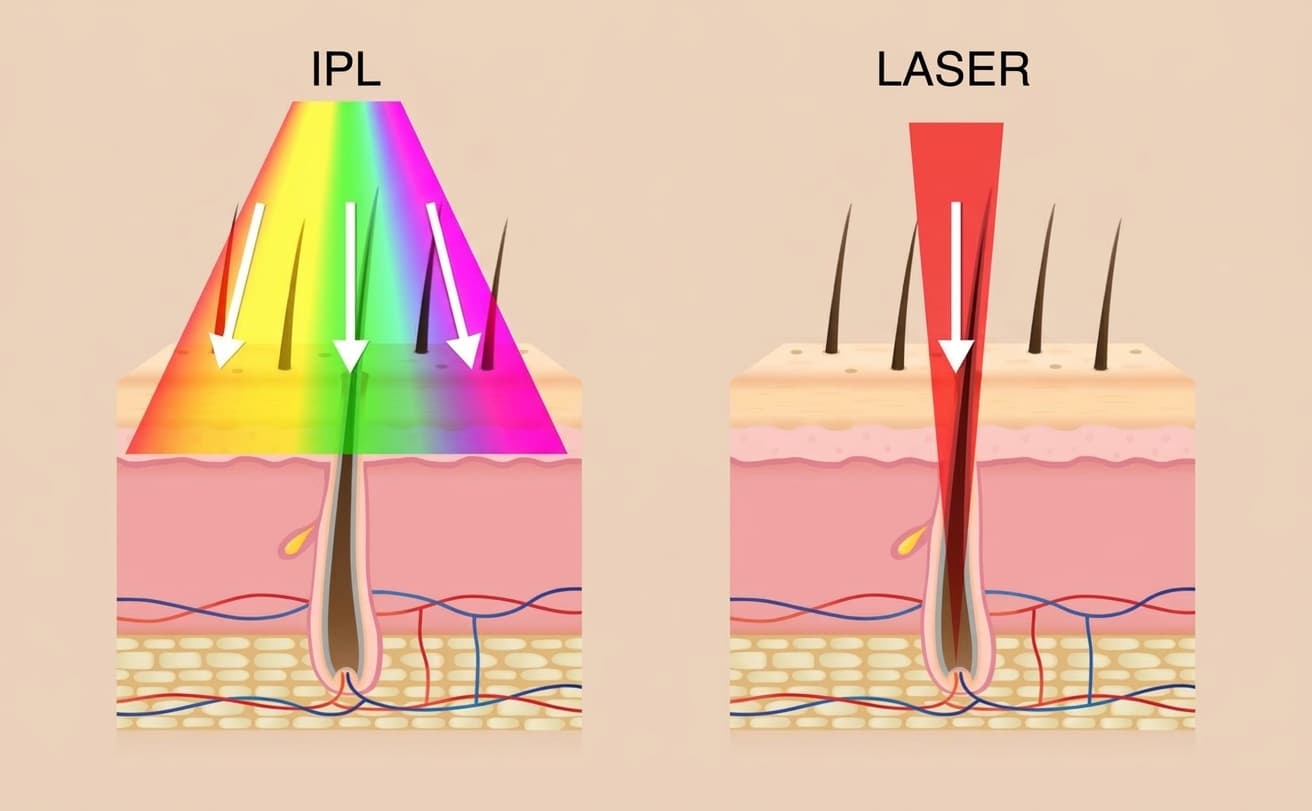
With laser, light of a specific wavelength is aimed at the hair. The pigment in the hair absorbs the energy and converts it into heat. This heat acts on the hair follicle and can reduce future hair growth over the long term.
IPL stands for “intense pulsed light.” Unlike laser, it does not use a single beam of one wavelength but a broader spectrum of light. Here too, the pigment in the hair is the key target.
What is the difference?
The main difference starts with the light source. Professional lasers include alexandrite, diode and Nd:YAG systems. Which laser is used matters especially for different skin types.
IPL is more versatile in design and is used both professionally in studios and in devices for home use.
With dark hair and relatively light skin, both methods are generally worth considering. In one randomized study of underarm treatment, both IPL and a diode laser significantly reduced hair growth. Twelve months after treatment, average hair reduction in that study was 52.7 percent for IPL and 69.2 percent for the diode laser. Results from a single study, however, cannot be applied to every body area, device and skin type.
What about darker skin?
Here, the choice of technology matters most. Ideally, the light is absorbed strongly by the hair and only weakly by the skin. With more pigmented skin, the choice of wavelength can therefore be decisive.
Longer-wavelength lasers such as Nd:YAG are often used for darker skin types. Studies and review articles show that laser treatment is possible for darker skin types when the wavelength and treatment settings are adjusted accordingly.
For at-home IPL, however, you should always check the approval of the specific device. Not every device is suitable for every skin tone.
What happens with light hair?
Laser and IPL need enough pigment in the hair. Black and brown hair therefore generally offers the best conditions. The lighter the hair, the harder it becomes for the light to reach and affect the hair follicle.
With very light blonde, red, gray or white hair, the options for laser and IPL are significantly limited. More detail is in our guide Which hair removal method works on light hair?.
Which is cheaper?
It depends heavily on where and how much you want to treat.
With professional treatments, you usually pay per session or per body area. With at-home IPL, you mainly pay for the device and can then use it repeatedly. In exchange, you have to carry out the treatment yourself and follow the recommended schedule. For details on what drives the costs, read How much does hair removal cost?. To estimate costs for your own selection of method, body area and sessions, use our Cost Calculator.
The essentials at a glance
Laser
Targeted light at a defined wavelength. Especially useful when you want professional treatment, or when skin and hair color call for careful choice of technology.
IPL
Broad-spectrum light. It is available as professional treatment and as home devices. Home IPL can be especially interesting if you want to treat larger body areas regularly.
Electrolysis
Not a light-based method. It is especially relevant when the hair contains little pigment or only individual hairs need treatment.
Bottom line
Laser and IPL can both lead to a long-term reduction in hair growth. There is no universal ranking. Hair color, skin tone, body area and amount of hair are the main factors in deciding which method makes sense.